





Blemish in God’s Family: A Lifelong Consequence
- Sermon By: William Subash
- Categories: Birth of a Nation—the Forerunner for Church
Bible Passage: Genesis 16
I. Abram and Sarai
1. Sarai was unable to wait for God’s promises to come true
a. Verse 1: Sarai, Abram’s wife, had borne him no children. But she had an Egyptian slave named Hagar; 2 so she said to Abram, “The Lord has kept me from having children. Go, sleep with my slave; perhaps I can build a family through her”
b. She lost patience or lost confidence in God’s promise—just as Eve, Sarai doubted the Word of God
c. When our prayer gets delayed, many of us turn bitter towards God and act desperately—“The LORD has kept me from having children”
b. She lost patience or lost confidence in God’s promise—just as Eve, Sarai doubted the Word of God
c. When our prayer gets delayed, many of us turn bitter towards God and act desperately—“The LORD has kept me from having children”
2. Abram failed in his spiritual leadership over his wife (Verse 2c Abram agreed to what Sarai said)
a. Abram acts like Adam
b. Difficult time such as this one is the time to show leadership and lead family in the right direction
c. Failure of leadership at a crucial situation—decisions taken in a desperate manner can be costly and may have irreversible consequence such as this one
b. Difficult time such as this one is the time to show leadership and lead family in the right direction
c. Failure of leadership at a crucial situation—decisions taken in a desperate manner can be costly and may have irreversible consequence such as this one
3. Both Sarah and Abraham took matters into their own hands and functioned outside of God’s plan (verse 3-4 Sarai his wife took her Egyptian slave Hagar and gave her to her husband to be his wife. 4 He slept with Hagar, and she conceived)
4. Though it looks immoral from the side of Sarai and Abram, it was an accepted practice in the ancient near east
5. God had far better plan than the one Abraham and Sarah devised—it required waiting!
4. Though it looks immoral from the side of Sarai and Abram, it was an accepted practice in the ancient near east
5. God had far better plan than the one Abraham and Sarah devised—it required waiting!
II. Predicaments of Hagar
1. Hagar was a slave girl and thereby she was both socially and economically powerless (16:1)
a. Hagar was a foreigner
b. An outsider
c. A slave
d. Had very little or “no” rights
e. Serving in a dysfunctional family
f. A surrogate
b. An outsider
c. A slave
d. Had very little or “no” rights
e. Serving in a dysfunctional family
f. A surrogate
2. Hagar was taken for granted by her masters— she was used to promote her owner’s interest (16:3-4— Sarai his wife took her Egyptian slave Hagar and gave her to her husband to be his wife. 4 He slept with Hagar, and she conceived)
3. Most likely, Hagar was not even consulted for this bizarre plan of Sarai
4. Sarah mistreated Hagar (16:6; 22:10 “Cast out this slave woman with her son; for the son of this slave woman shall not be heir with my son Isaac”)
5. Hagar became ALMOST a single parent (an absentee father)—22:14 Early the next morning Abraham took some food and a skin of water and gave them to Hagar. He set them on her shoulders and then sent her off with the boy. She went on her way and wandered in the Desert of Beersheba
3. Most likely, Hagar was not even consulted for this bizarre plan of Sarai
4. Sarah mistreated Hagar (16:6; 22:10 “Cast out this slave woman with her son; for the son of this slave woman shall not be heir with my son Isaac”)
5. Hagar became ALMOST a single parent (an absentee father)—22:14 Early the next morning Abraham took some food and a skin of water and gave them to Hagar. He set them on her shoulders and then sent her off with the boy. She went on her way and wandered in the Desert of Beersheba
III. Providences of Hagar
1. God witnessed Hagar’s pain and intervened (the Good News)—God is not an uncaring, partisan God (16:7)
2. Hagar tells the truth “I am running away from my mistress Sarai” (16:8)—Hagar was running away from her problems
3. God shows means (a blueprint) to solve her predicament (16:9-12):
a. Prior to meeting with God, she had taken her own course of action (verse 6c: Hagar fled from Sarai)
b. God wanted her to face her problem, not running away from it (verses 9-10 the Angel of the Lord told her, “Go back to your mistress and submit to her.” 10 The Angel added, “I will increase your descendants so much that they will be too numerous to count.”)
c. God’s blessing would begin when she obeyed (blueprint) what God told her to do despite her situation
d. Verse 15 So Hagar bore Abram a son, and Abram gave the name Ishmael to the son she had borne
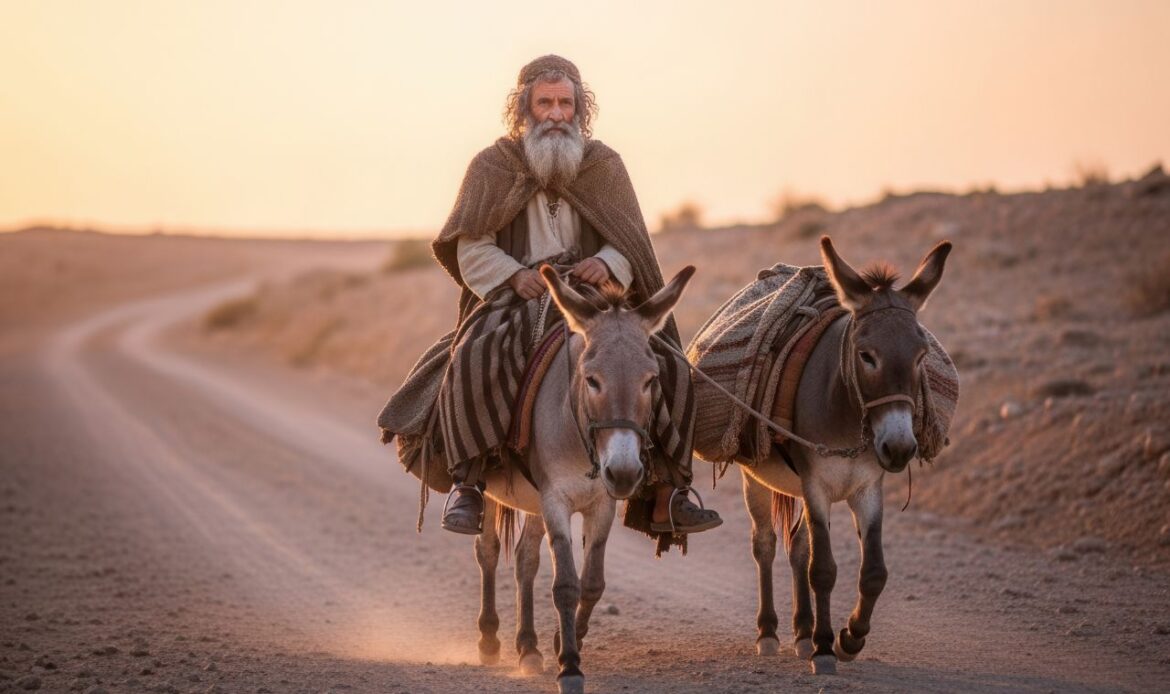
e. In verses 11-12 we see the birth of a nation “You are now pregnant and you will give birth to a son. You shall name him Ishmael, for the Lord has heard of your misery. 12 He will be a wild donkey of a man; his hand will be against everyone and everyone’s hand against him, and he will live in hostility toward all his brothers4. Like Moses, Elijah, and Job, Hagar sees God (16:9-12; 22:17-19)— 13 She gave this name to the Lord who spoke to her: “You are the God who sees me,” for she said, “I have now seen the One who sees me”
5. Like Abraham, she receives a divine promise (16:11-12)
6. She names God “El Roi” (16:13-14 El Roi “God who sees me”)
b. God wanted her to face her problem, not running away from it (verses 9-10 the Angel of the Lord told her, “Go back to your mistress and submit to her.” 10 The Angel added, “I will increase your descendants so much that they will be too numerous to count.”)
c. God’s blessing would begin when she obeyed (blueprint) what God told her to do despite her situation
d. Verse 15 So Hagar bore Abram a son, and Abram gave the name Ishmael to the son she had borne
e. In verses 11-12 we see the birth of a nation “You are now pregnant and you will give birth to a son. You shall name him Ishmael, for the Lord has heard of your misery. 12 He will be a wild donkey of a man; his hand will be against everyone and everyone’s hand against him, and he will live in hostility toward all his brothers4. Like Moses, Elijah, and Job, Hagar sees God (16:9-12; 22:17-19)— 13 She gave this name to the Lord who spoke to her: “You are the God who sees me,” for she said, “I have now seen the One who sees me”
5. Like Abraham, she receives a divine promise (16:11-12)
6. She names God “El Roi” (16:13-14 El Roi “God who sees me”)
a. “Divine seeing” is divine care to a person in need
b. “Divine seeing” caused a process for Hagar’s flourishing (16:15)
c. God comes to the aid of those who are rejected and marginalized
d. Human failure does not invalidate God’s purposes within the unconditional covenant
b. “Divine seeing” caused a process for Hagar’s flourishing (16:15)
c. God comes to the aid of those who are rejected and marginalized
d. Human failure does not invalidate God’s purposes within the unconditional covenant
Principles
1. Decisions have consequences. Therefore, believers’ decision-making out of desperation must be avoided
2. When you’re on a mission of God, you must stick to God’s plan and His timing
3. God’s delay is not necessarily God’s denial. Delay always has divine purpose
4. One does not solve his/her problems by running away from them
5. Ishmaelites have their origin in God but are not part of God’s unconditional covenant with God
6. God favors (=sees) the weak, weary, and rejected while He continues with His unconditional covenant with Abram
7. “The Angel of the LORD” of verse 7 is Jesus’ pre-incarnation appearance
2. When you’re on a mission of God, you must stick to God’s plan and His timing
3. God’s delay is not necessarily God’s denial. Delay always has divine purpose
4. One does not solve his/her problems by running away from them
5. Ishmaelites have their origin in God but are not part of God’s unconditional covenant with God
6. God favors (=sees) the weak, weary, and rejected while He continues with His unconditional covenant with Abram
7. “The Angel of the LORD” of verse 7 is Jesus’ pre-incarnation appearance
a. Exod 14:19 Then the Angel of God, who had been traveling in front of Israel’s army, withdrew and went behind them. The pillar of cloud also moved from in front and stood behind them
b. Exod 23:20 “See, I am sending the Angel ahead of you to guard you along the way and to bring you to the place I have prepared
c. 1 Kings 19:7 The Angel of the Lord came back a second time and touched him and said, “Get up and eat, for the journey is too much for you”
d. 2 Kings 19:35 That night the Angel of the Lord went out and put to death a hundred and eighty-five thousand in the Assyrian camp. When the people got up the next morning—there were all the dead bodies!
b. Exod 23:20 “See, I am sending the Angel ahead of you to guard you along the way and to bring you to the place I have prepared
c. 1 Kings 19:7 The Angel of the Lord came back a second time and touched him and said, “Get up and eat, for the journey is too much for you”
d. 2 Kings 19:35 That night the Angel of the Lord went out and put to death a hundred and eighty-five thousand in the Assyrian camp. When the people got up the next morning—there were all the dead bodies!
8. The Angel of the LORD in Gen 16:7 is God Himself, the Second Person in the Trinity, who appeared in man’s critical moments
9. The Church is the modern-day Hagar who is met by the Angel of the LORD at her critical moment
9. The Church is the modern-day Hagar who is met by the Angel of the LORD at her critical moment
Jesus sees an invalid person at the Pool of Bethesda—John 5:6 “When Jesus saw him lying there and learned that he had been in this condition for a long time, he asked him, “Do you want to get well?”
1. The man was helpless
a. I have no one to help me (verse 7)
b. Invalid for thirty-eight years (verse 5)
b. Invalid for thirty-eight years (verse 5)
2. Jesus takes the initiative (divine initiative) and asks the question “Do you want to get well?” (verse 6)
3. The man is healed completely
3. The man is healed completely
Takeaway:
1. Avoid making decisions out of desperation
2. Learn to flow along with God, His timing, and His provisions
2. Learn to flow along with God, His timing, and His provisions